The squashed sombrero is six years old today – but why do we remember it?
On March 12, 2020, Boris Johnson closed his Covid press conference by urging people with either a temperature or a continuous cough to stay at home:
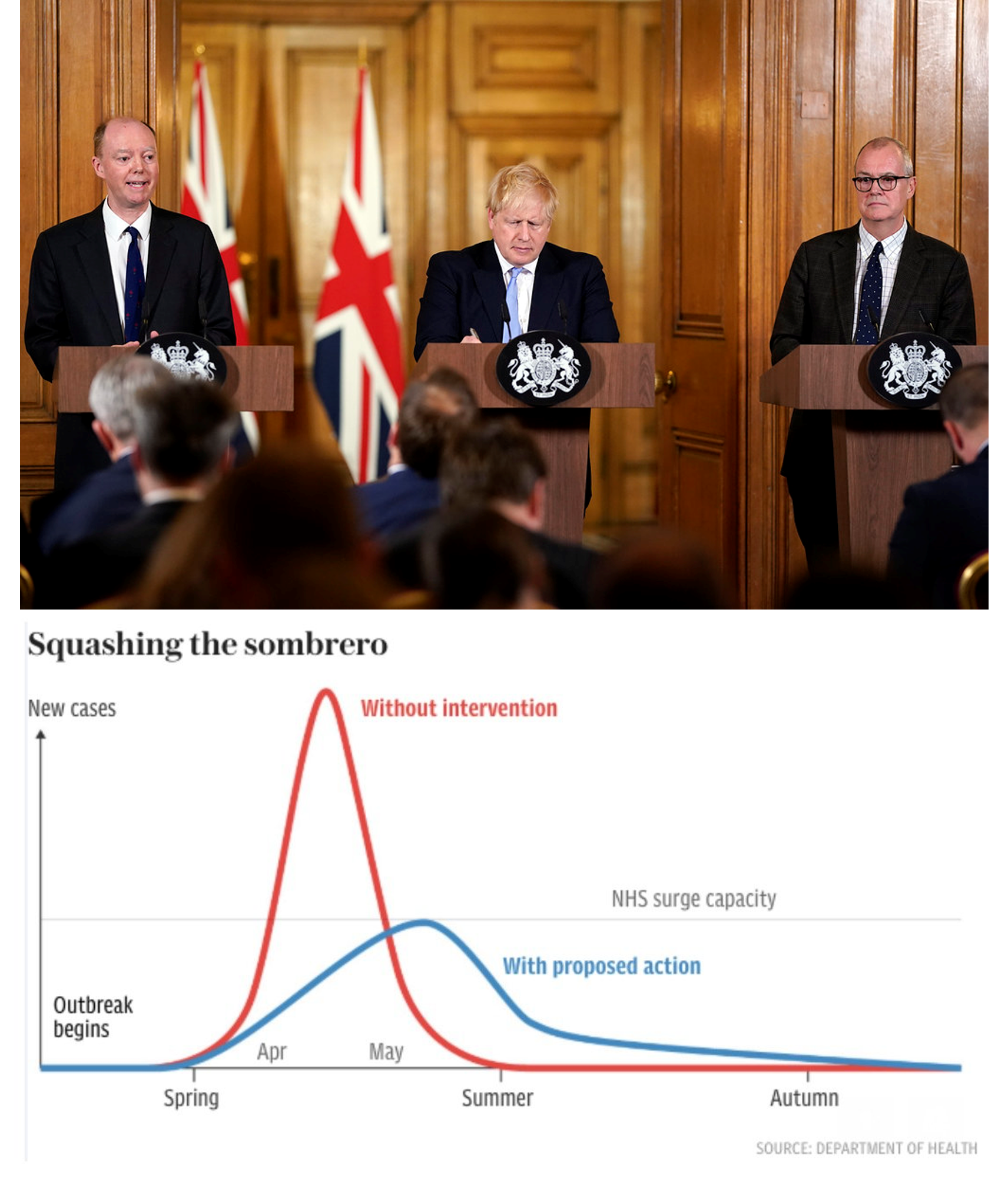
“The reasons that we advise you to do that is really that this will help us to delay and flatten the peaks, squash that sombrero that you saw on the map, because that is the way to minimise the suffering and minimise the impact of this disease.”
The phrase stood out and was widely quoted in media coverage – and countless water cooler conversations (lockdown didn’t start for another couple of weeks).
We’ve since learned that Johnson struggled with graphs being presented to him by scientific experts like Patrick Vallance, who alongside Jonathan Van Tam, later became famous for their use of metaphors during Covid.
But it’s not just those trying to educate the prime minister who can benefit from using metaphors to convey complex information.
The reasons they work are relatively simple.
First, visual metaphors can collapse several layers of information into one simple image, reducing the number of steps our brains need to take to process the information. A sombrero is easier to picture than a long period of low infections followed by a tall peak, then a long tail.
Second, the image is vivid and slightly surprising – especially at the end of a long and serious press conference. The fact it’s distinctive makes it stand out, both at the time and in our memories.
But Johnson didn’t just describe the pandemic as a sombrero – he wanted to squash it. And that introduces action as well, helping us see the causality between the new rules and a delayed peak of infections.
But there’s a twist. While very powerful in spreading a message and being remembered, using metaphors in this way can sometimes backfire.
Although memorable, a frivolous analogy in a serious situation runs a very high risk of being seen to completely misjudge the tone of the conversation.
That might make you look out of touch or ‘unserious’, while if the serious message appears flippant, people might remember it, but not act on it.
And of course, if it’s not done carefully, it could persuade your audience that you’re not capable of understanding the detail yourself – which might not be the look you’re going for if you’re leading a crisis.
📷 Andrew Parsons / 10 Downing Street
Graphic: Daily Telegraph
Leave a Reply