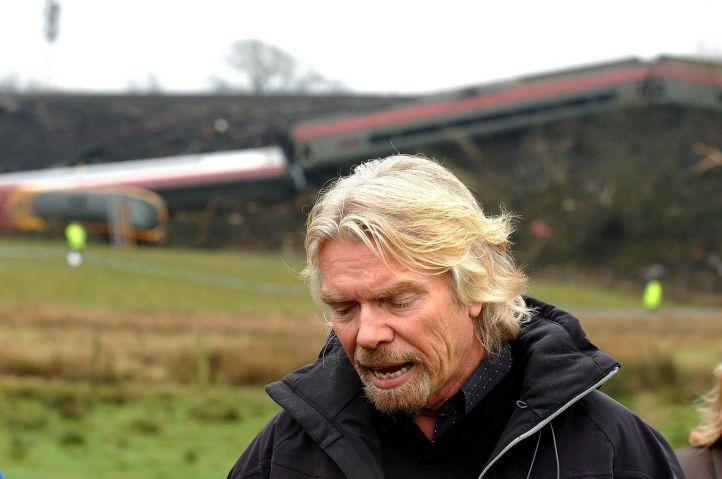
Nineteen years ago, Richard Branson raised the bar for CEOs in crisis situations.
A Virgin Trains Pendolino had derailed at Grayrigg in Cumbria shortly after 8pm the previous night, killing one passenger and injuring dozens more.
News had broken almost instantly, thanks to a BBC executive being among the 109 passengers on board when disaster struck. Just as they would today, comms teams had zero time to respond.
The following morning, Richard Branson had cut short a family holiday on Necker, in the British Virgin Islands, flown to the UK and was at the scene, where he was shown the site and visited the injured in hospital.
The eventual cause lay with infrastructure, but Branson could not have known that at the time. He could have waited for certainty, or issued a statement remotely. He might even have let the ubiquitous anonymised spokesperson be the voice of his company instead.
But Branson showed up.
By travelling immediately, he signalled responsibility before fault had been established. This isn’t the same as liability, it’s moral ownership. He’s telling people that the buck stops with him.
And he visibly prioritised the injured and their families.
What he did next was described by journalists at the time was “genius PR” – he shifted the narrative onto the heroism of the driver, who had stayed in his seat fighting to steer the train until it had ground to a halt. And he talked about the safety performance of Virgin Trains’ Pendolino fleet.
Grayrigg was one of the last crisis comms case studies before the advent of social media, and comms teams still talked of the importance of the golden hour after an incident broke.
Fast forward nearly two decades and the need for speed is greater.
The tech exists – and working cultures have changed – to make CEOs visible instantly, and to make remote leadership normal.
But visibility isn’t the same as presence.
And that’s where the sequence of communications becomes so important.
When harm is serious and people are injured, nothing demonstrates your moral priority more than personal disruption. Cutting short a holiday to stand beside those affected is a costly signal, and it shows those most affected that you care.
Without this, the shift in narrative could fall flat – or worse, it could look like an attempt by the PR machine to shift attention away from responsibility.
As Daniel Kahneman wrote, our fast, intuitive system of thinking kicks in before we engage slower rational analysis. Similarly, Jonathan Haidt argues that moral judgement comes first; reasoning comes along second and tries to justify it.
In a crisis, people decide instinctively, within seconds, where the brand and its leader’s priorities lie, and based on that, whether they should trust either or both.
Branson earned the right to shape the narrative because he first satisfied Kahneman’s System 1 and Haidt’s moral intuition. Only then did System 2 allow reframing.
Had Grayrigg happened today, things would have been very different – not least because there are new questions as to how far the public would trust Branson as a leader. But that aside, he would almost certainly have posted quickly online – and then got on the plane.
Because before he could change the story, he had to show he cared about the people in it.
Leave a Reply